What makes a good explainer video idea?
A good explainer video idea answers one specific question for one specific audience. “How our product works” is a topic. “How a new customer sends their first invoice in under two minutes” is an idea. The second tells you who's watching, what they want and where the video ends.
The best sources of ideas are the questions you already answer again and again: support tickets, the same three questions in every onboarding session, the part of the lesson where half the class gets lost. If you've explained something more than five times, it's probably worth a video.
How do you turn an idea into a prompt?
Turn an idea into a prompt by naming the audience, the topic and the takeaway in one sentence. A simple formula works well:
For example: “Explain how to report a near miss to warehouse staff so they know it takes two minutes and won't get anyone in trouble. End with where the form is.” Every idea below follows this shape, so you can paste it as it is or swap in your own details.
Which look and length should you choose?
Choose the look that fits where the video will be watched, and the length that fits one idea. The five looks below are the drawing styles in Sketchflare.
| Look | What it looks like | Good for |
|---|---|---|
| Whiteboard | Black marker on a clean white board | Almost anything: training, product explainers, policies |
| Notebook | Blue ballpoint on ruled paper | Friendly how-tos, tips, student revision, social posts |
| Chalkboard | Soft chalk on a green slate | Lessons, classroom topics, “back to basics” explainers |
| Blueprint | White lines on an engineer's grid | Processes, systems, technical and safety topics |
| Pencil | Graphite pencil on warm paper | Calm, personal or sensitive topics, storytelling |
- About 30 seconds: a teaser, a single tip or a reminder.
- 1 minute: one concept or one rule with an example.
- 2–3 minutes: most explainers: a process, a product feature, a short lesson.
- 5 minutes: a topic with several steps or parts.
- 10 minutes: a full lesson or a detailed walkthrough. Consider splitting it into shorter videos.
What explainer videos can L&D and training teams make?
Training teams get the most from explainers that replace a slide deck nobody reads or a session that's repeated every month. For a deeper list on one topic, see our compliance training video ideas.
| Prompt | Look | Length |
|---|---|---|
| Explain how to spot a phishing email to office staff, ending with how to report it. | Whiteboard | 1 min |
| Explain the situation, behaviour, impact feedback model to new managers so they can use it in their next one-to-one. | Notebook | 2 min |
| Explain our customer complaint process to front-line staff, step by step, ending with when to escalate. | Blueprint | 3 min |
| Explain how to run a five-minute safety briefing to team leaders, with a simple checklist at the end. | Blueprint | 2 min |
| Explain what counts as personal data to warehouse staff, using examples from labels, screens and paperwork. | Whiteboard | 2 min |
| Recap the three key points of our feedback course for managers who finished it a month ago. | Notebook | 30 sec |
What explainer videos can HR teams make?
HR explainers work best for questions every employee has at some point but nobody wants to ask in person. Leave out figures that change, such as allowance amounts and dates, and link to the current policy instead.
| Prompt | Look | Length |
|---|---|---|
| Welcome a new starter to the company and explain what their first day, week and month will look like. | Whiteboard | 2 min |
| Explain how to book annual leave to all staff, ending with where to check how many days they have left. | Notebook | 1 min |
| Explain how to raise a concern at work to employees, what happens next and who they can talk to. | Pencil | 2 min |
| Explain how our performance review cycle works to new employees, from goal setting to the year-end conversation. | Whiteboard | 3 min |
| Explain how to request flexible working to employees, step by step. | Notebook | 2 min |
| Explain what our employee assistance programme offers and how to contact it confidentially. | Pencil | 1 min |
For a full onboarding script you can adapt, see the employee onboarding video script template.
What explainer videos can product and customer education teams make?
Product explainers should show a customer reaching a result, not tour every button. Describe the task in words and drawings instead of filming screens, so the video doesn't go out of date with the next release.
| Prompt | Look | Length |
|---|---|---|
| Explain what our product does to a first-time visitor in plain words, ending with how to start a free trial. | Whiteboard | 1 min |
| Explain how data moves from a customer's phone to our cloud and onto their dashboard, for non-technical buyers. | Blueprint | 2 min |
| Explain how a new customer sends their first invoice, step by step, ending with what they'll see when it's paid. | Notebook | 2 min |
| Explain the difference between our three plans to small business owners so they can pick the right one. | Whiteboard | 1 min |
| Explain how our security and data storage work to IT reviewers, in plain language. | Blueprint | 3 min |
| Explain one new feature to existing customers: the problem it solves and how to turn it on. | Whiteboard | 30 sec |
What explainer videos can teachers make?
Teachers can use explainers to introduce a topic before a lesson, to give students something to rewatch at revision time, or to cover a lesson when they're absent. Chalkboard feels at home in a classroom; Notebook suits revision.
| Prompt | Look | Length |
|---|---|---|
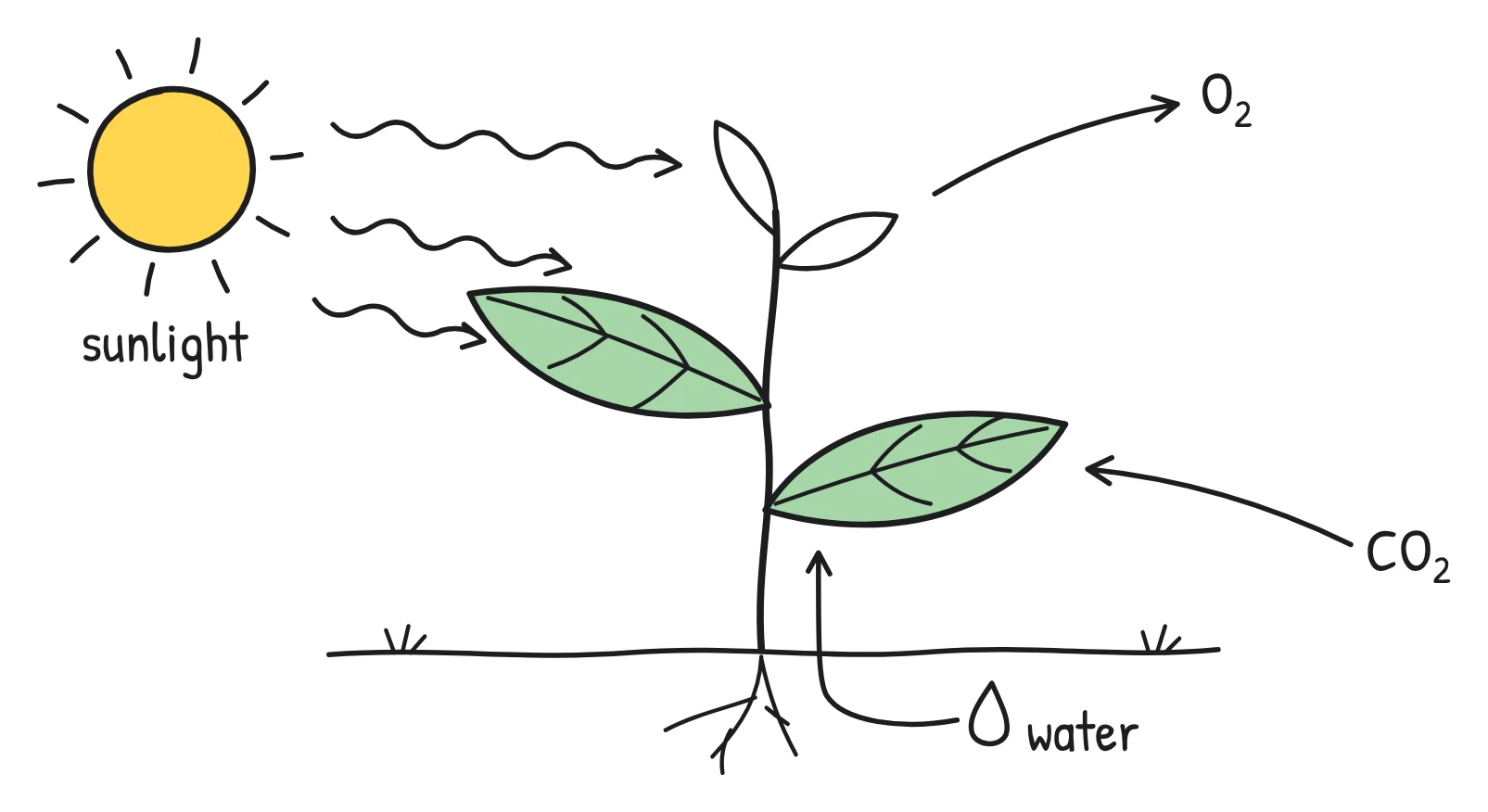
| Explain photosynthesis to 11-year-olds, showing how sunlight, water and carbon dioxide become sugar and oxygen. | Chalkboard | 2 min |
| Explain how to find the area of a triangle to 10-year-olds, with two worked examples. | Chalkboard | 2 min |
| Explain the causes of the First World War to 14-year-olds as four connected ideas. | Pencil | 5 min |
| Explain the water cycle to 8-year-olds, ending with one question for them to answer. | Notebook | 1 min |
| Explain how to structure a persuasive essay to secondary school students, paragraph by paragraph. | Notebook | 3 min |
| Explain how a bill becomes law in our country to 15-year-olds, step by step. | Blueprint | 3 min |
Videos can be made in 16 languages, which helps with language classes and with families who speak a different language at home. See teachers and lessons for more.
What explainer videos can nonprofits and charities make?
Nonprofit explainers usually need to do one of three things: explain the problem, show where the money goes, or tell people how to get help. Keep them short enough to share on social media and honest enough to stand up to a sceptical donor.
| Prompt | Look | Length |
|---|---|---|
| Explain the problem our charity tackles to potential donors in plain words, ending with how to give. | Pencil | 1 min |
| Explain where a monthly donation goes, using our own published figures, to supporters. | Whiteboard | 1 min |
| Explain how to sign up as a volunteer and what the first session involves. | Notebook | 1 min |
| Explain who our helpline is for, what happens when you call and that it's confidential. | Pencil | 1 min |
| Explain our theory of change to a grant funder: the problem, what we do, and the change we expect. | Blueprint | 3 min |
| Thank our supporters for this year and show three things their support made possible. | Pencil | 30 sec |
What explainer videos can creators make?
Creators can use short explainers for YouTube Shorts, Reels and TikTok, where a clear idea in under a minute does well. Choose the Tall 9:16 shape for those platforms and Square 1:1 for LinkedIn and feeds. See YouTube Shorts and Reels for more.
| Prompt | Look | Length |
|---|---|---|
| Explain the 50/30/20 budgeting rule to young adults with one worked example. | Notebook | 30 sec |
| Explain compound interest to beginners using a simple savings example. | Whiteboard | 1 min |
| Explain how a sourdough starter works to home bakers, from flour and water to bubbles. | Pencil | 1 min |
| Explain three common myths about sleep to a general audience, using only sources I provide. | Chalkboard | 1 min |
| Summarise this research paper for a general audience: the question, the method and the main finding. | Whiteboard | 2 min |
| Explain how a jet engine works to curious teenagers, part by part. | Blueprint | 2 min |
Why use a hand-drawn style for explainers?
A hand-drawn style keeps attention on one idea at a time, because each drawing appears as the narrator talks about it. In a study of millions of edX viewing sessions, tutorials in which an instructor drew freehand kept viewers engaged 1.5 to 2 times as long as slide or screencast tutorials. Read more in why whiteboard videos work.
How do you go from idea to finished explainer?
Going from idea to finished explainer takes a few minutes once you have a clear prompt.
- Pick one idea and write it as a one-line prompt using the formula above.
- Start the video. In Sketchflare, type the prompt, upload a document (text-based PDFs work best) or use “Paste my script” if you've already written the words. For help writing one, see how to write an explainer video script.
- Choose the options. Look, voice (one of six narrators, or captions only), length, shape and language.
- Press “Make my video”. The script is split into scenes, each scene is drawn as line art, and the voice-over and captions are added.
- Edit what needs it. Change any line of narration, describe a different drawing and press “Draw it again”, or add, move and delete scenes.
- Share it. Download the MP4 and subtitles, send a share link, or on Pro and Team export SCORM for your LMS.
Questions
What is a good topic for an explainer video?
A good topic answers one question that a specific audience already asks, such as how to complete a task or why a process works the way it does. If you've explained it more than five times, it's a strong candidate.
How long should an explainer video be?
Most explainers work best at one to three minutes. Use about 30 seconds for teasers and social posts, and five to ten minutes only for full lessons.
What should I write in an AI video prompt?
Name the audience, the topic and the one thing they should understand or do, and say how it should end. For example: explain how to book annual leave to all staff, ending with where to check remaining days.
Which style is best for explainer videos?
It depends on the setting. A clean whiteboard style suits most business explainers, chalkboard suits classrooms, blueprint suits technical processes, and a softer pencil style suits sensitive topics.
Can I make explainer videos for social media?
Yes. Choose a tall 9:16 shape for Shorts, Reels and TikTok, or square 1:1 for LinkedIn and feeds, and keep it to about 30 seconds to a minute.